Explore Vittala Temple
Marvel at the iconic Stone Chariot and the musical pillars that produce distinct notes a masterpiece of Vijayanagara
Walk through the ruins of the Vijayanagara Empire - a civilisation that once ruled the world's wealthiest kingdom

Place
Vijayanagara district
UNESCO Site
Opens 6AM - 6 PM
Ticket
₹40 (Indian) / ₹600 (foreign)
Ideal Stay
2 Days
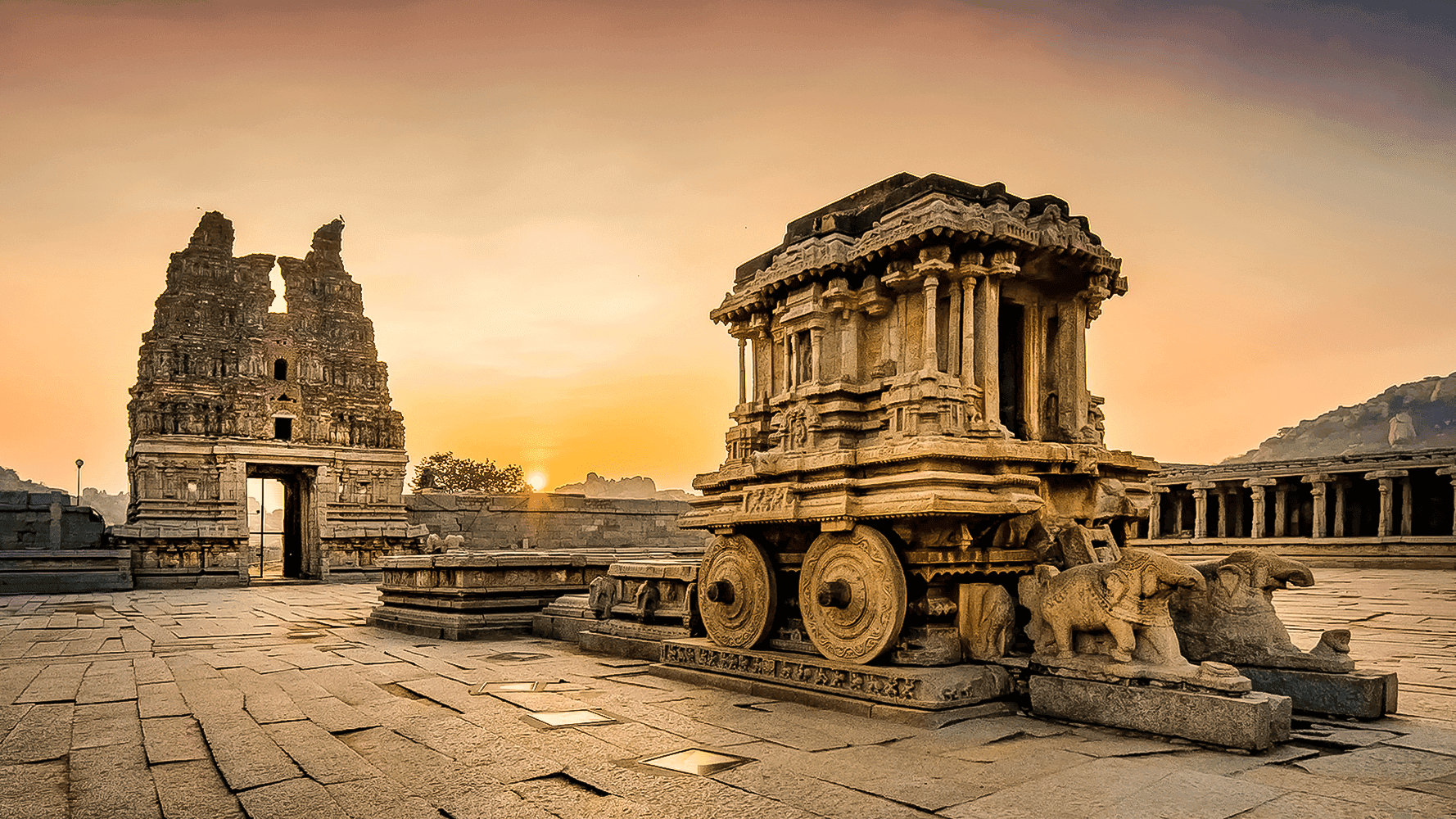
Photo: © Prajwal / Karnataka Tourism
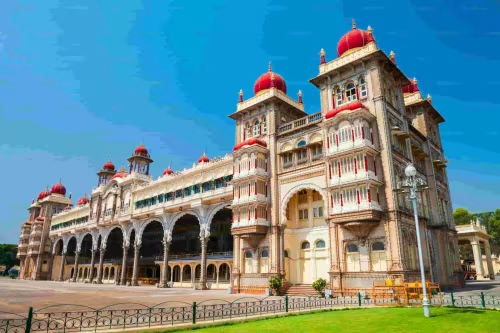
Mysuru, often known as the "Cultural capital of Karnataka", is a city rich in history, culture, heritage & legacy. So where is Mysuru? Situated at the foothills of the Chamundi Hills, it is about 140 km southwest of Bengaluru. Mysuru’s pleasant climate complements the city’s timeless charm. The city has rather lower temperatures because of its somewhat higher elevation (~770 meters above sea level).
"Hampi was the world's second-largest medieval city after Beijing, with a population of over 500,000 people at the height of its glory in the 14th–16th centuries."
It is one of the most interesting cities in South India, offering many sites to visit & explore. Under the Wodeyars from 1399 to Independence, Mysuru is known for its royal past and magnificent architecture and monuments. This former state capital is a perfect fusion of modernism and old world appeal. With its royal grandeur, Mysuru invites you to visit & explore its grand allure, all year round. Mysuru is placed 3rd in the newly created “Super Swachh League” under Swachh Survekshan 2024–25, which covers cities with a population between 3 and 10 lakh, site of the internationally sought-after Mysuru Palace. The palace draws over six million people annually. The best time to visit Mysuru is all around the year.
Photo: © Prajwal / Karnataka Tourism
Mysuru is placed 3rd in the newly created “Super Swachh League” under Swachh Survekshan 2024–25, which covers cities with a population between 3 and 10 lakh, site of the internationally sought-after Mysuru Palace. The palace draws over six million people annually. The best time to visit Mysuru is all around the year.
"Sunset over the boulder-strewn landscape of Hampi — where every stone holds a thousand years of history"
Photo: © Prajwal / Karnataka Tourism
From temple exploration to river crossings — Hampi offers experiences that stay with you for a lifetime.
Marvel at the iconic Stone Chariot and the musical pillars that produce distinct notes a masterpiece of Vijayanagara
Climb to the top before dawn and watch the sun rise over the ruins one of India's most spectacular sunrise viewpoints.

Cross the sacred river in a traditional circular coracle boat to reach the Hippie Island of Virupapur Gadde.

Rent a bicycle and explore the vast archaeological landscape at your own pace

Hampi's dramatic boulders and ancient temples create extraordinary compositions at sunrise and sunset.

Experience the three-day cultural extravaganza with classical dance, music, and a grand procession of elephants

The Virupaksha Temple at the heart of Hampi has been in continuous worship for over 1,300 years. As you walk through the market street that once buzzed with merchants selling diamonds, the scale of this civilisation becomes overwhelmingly real. The Hemakuta Hill complex alone holds over 30 small temples spanning several centuries of Deccan architecture, each one a quiet sanctuary in the boulder landscape.
Virupaksha Temple - built 7th century CE
50-metre tall gopura tower at the entrance
Active pilgrimage site visited by thousands daily

The Royal Enclosure was the nerve centre of the Vijayanagara Empire — where the king held court, conducted state ceremonies, and planned military campaigns that shaped the history of South India.
The Mahanavami Dibba — a massive 12,000 square foot platform — was the venue for the grand Dasara celebrations, a tradition that continues in Mysuru to this day.
Lotus Mahal — finest example of Vijayanagara architecture
Elephant Stables housed 11 royal war elephants
Follow your day-by-day plan below — every stop includes entry fees, transport options and the best time to visit, right where you need it.
Visit Hampi's crown jewel before the crowds — Stone Chariot, musical pillars, magnificent mandapas in morning light.
The best time to visit Hampi is between October and February when the weather is cool and pleasant (15–28°C). The monsoon (June–September) brings lush greenery but heavy rainfall. March to May is very hot with temperatures exceeding 40°C. The Hampi Utsav festival in November is a particularly special time to visit.
The best time to visit Hampi is between October and February when the weather is cool and pleasant (15–28°C). The monsoon (June–September) brings lush greenery but heavy rainfall. March to May is very hot with temperatures exceeding 40°C. The Hampi Utsav festival in November is a particularly special time to visit.

The elusive Black Panther of Kabini is a rare wildlife marvel that has earned global fame. Spotted occasionally in the dense forests of Nagarhole National Park, it adds a thrilling allure to Karnataka’s rich biodiversity.

Maravanthe Beach offers a unique coastal experience where the highway runs between the roaring Arabian Sea on one side and the calm Souparnika River on the other. With its stunning contrast of landscapes, golden sands, and scenic sunsets, it’s one of Karnataka’s most picturesque beach drives.


As the sun dips into the Arabian Sea, Karnataka’s coastline transforms into a canvas of gold and crimson. Whether you’re at Gokarna, Malpe, or Kaup, the gentle waves, swaying palms, and vibrant skies create a serene, soul-soothing spectacle that lingers long after the light fades.


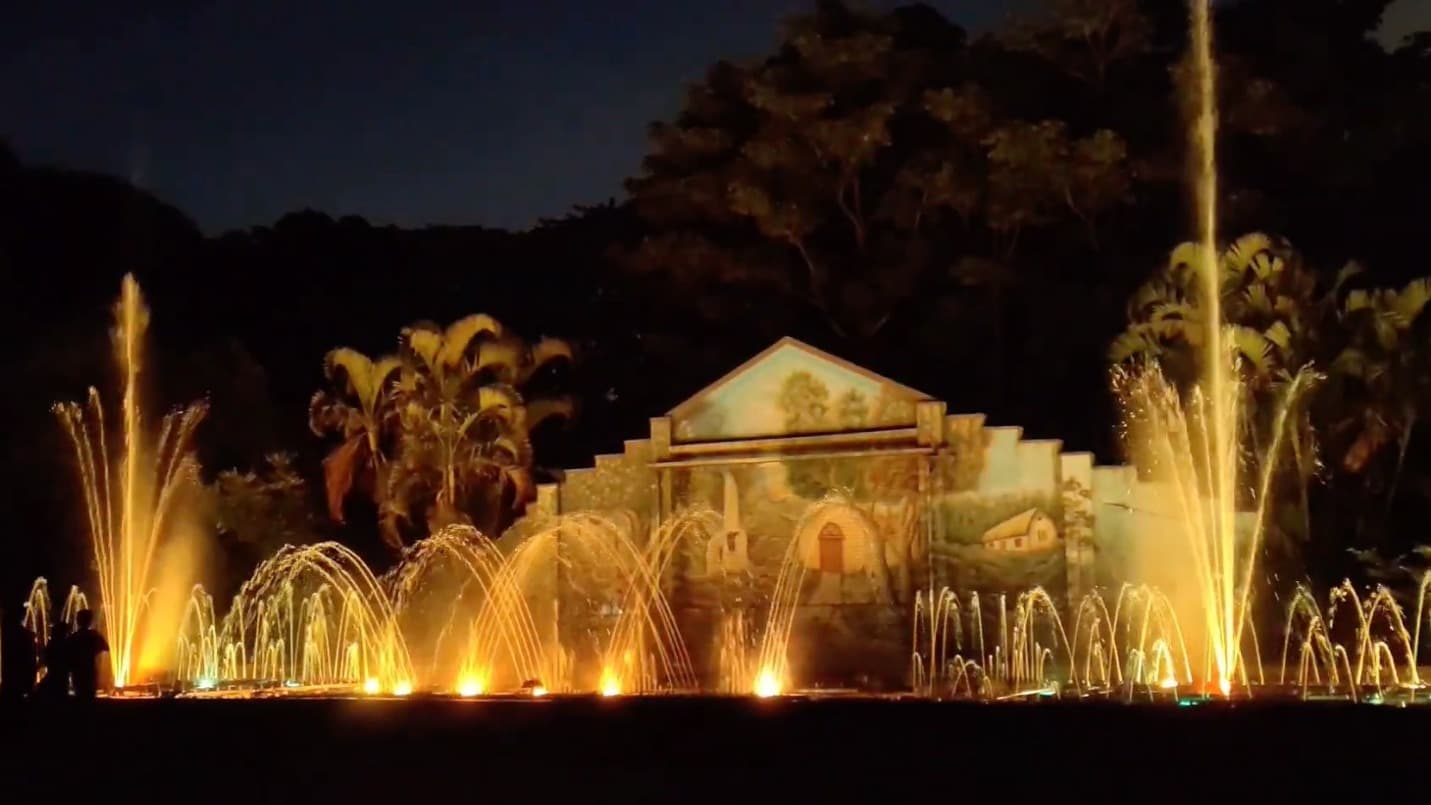
By day it’s royal, by night it’s magical—the Mysore Palace dazzles when lit up with nearly 100,000 bulbs. This weekend spectacle transforms the historical site into a fairy-tale vision, drawing crowds in awe of its grandeur.

Yakshagana is a vibrant folk theatre form from coastal Karnataka, blending dance, music, elaborate costumes, and storytelling. With its dramatic expressions and mythological themes, it captivates audiences through all-night performances that are equal parts spiritual and spectacular.

Standing tall in Bengaluru, Vidhana Soudha is the seat of Karnataka’s legislature and a symbol of state pride. With its majestic neo-Dravidian architecture and illuminated façade by night, it’s a striking landmark that blends tradition with democratic governance.

A masterpiece of Vijayanagara architecture, the Stone Chariot at Hampi’s Vittala Temple is one of India’s most iconic monuments. Carved entirely out of stone, this monolithic chariot stands as a testament to the artistic brilliance and engineering prowess of a bygone era.
Everything you wondered but didn't know who to ask.
The best time to visit Hampi is between October and February when the weather is cool and pleasant (15–28°C). The monsoon (June–September) brings lush greenery but heavy rainfall. March to May is very hot with temperatures exceeding 40°C. The Hampi Utsav festival in November is a particularly special time to visit.

The Tungabhadra River is not merely a geographical feature of Hampi — it is the soul of the landscape. The river's ancient ghats, the coracle boats, the banana groves on its banks, and the Chakra Teertha bathing spot are all central to Hampi's sacred geography. Crossing the river to the northern bank transports you to a different world — the bohemian village of Virupapur Gadde, with its guesthouses, paddy fields and boulder-climbing.
Chakra Teertha — most sacred bathing ghat
Coracle rides available daily 6 AM – 6 PM
Hippie Island — 2 km from main Hampi market