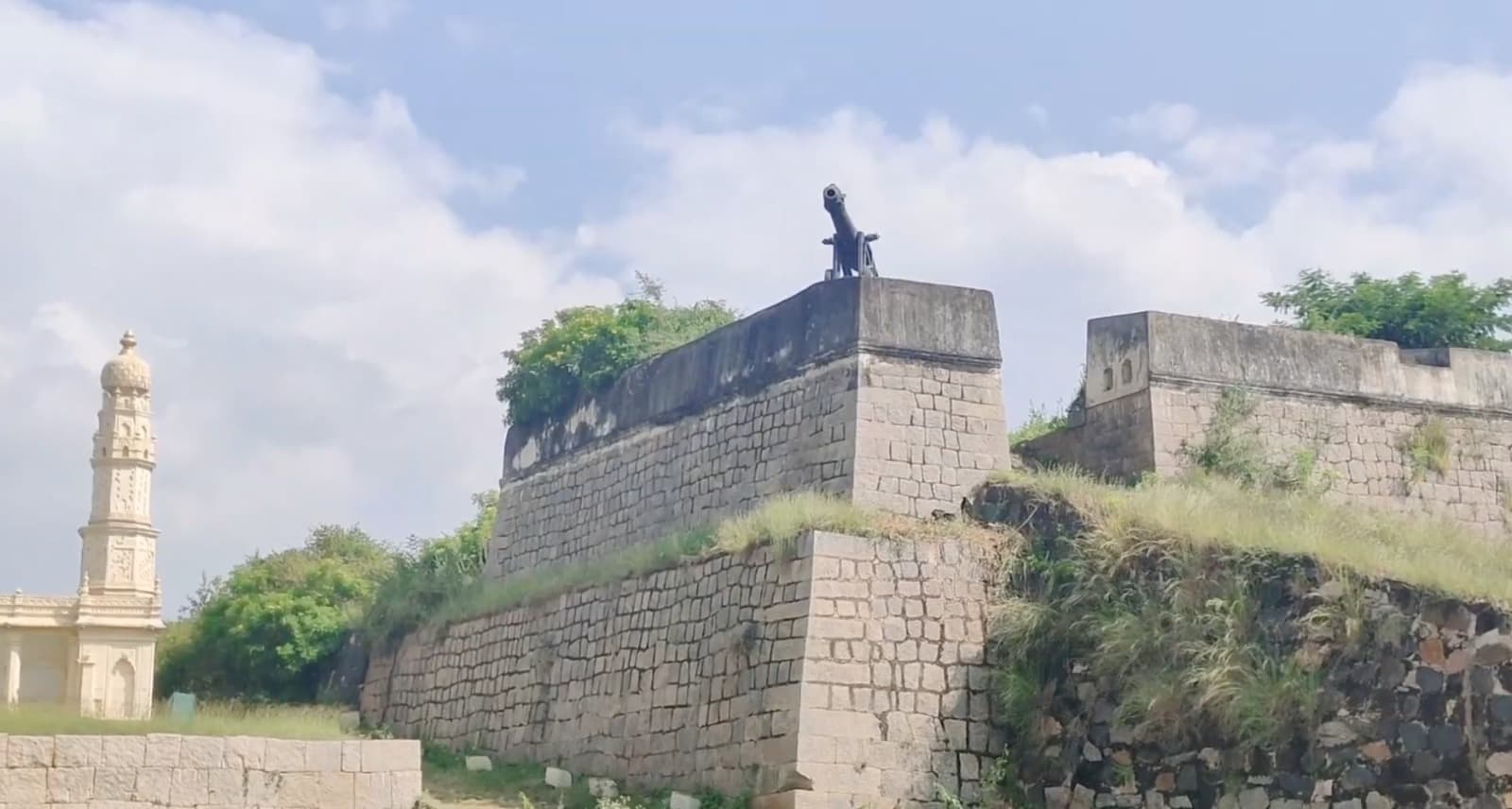
The magnificent Srirangapatna Fort, also known as Tipu’s Fort, stands in the historical capital of Mysuru and is one of Karnataka’s most significant historic landmarks. Tipu Sultan once called the island town of Srirangapatna home, making it a centre for his powerful kingdom. The fort has witnessed rise and fall of several dynasties, the Anglo-Mysore Wars and the 1799 siege. Today, the surviving walls, gateways, dungeons, religious structures, and surrounding monuments offer a glimpse into the military and cultural history of 18th-century Mysuru.
Quick Info
| Detail | Information |
| Location | Srirangapatna, Mandya district, Karnataka |
| Visiting Hours | 8:30 AM–5:30 PM; timings may vary |
| Entry Fee | Generally free for the fort area, Sound and light show, and other events may have varying costs |
| Time Required | 1-2 hours for the fort; 3–4 hours if combined with nearby heritage sites |
| Best Time to Visit | October to February |
History of Srirangapatna Fort
The Srirangapatna Fort was built by a local chieftain of the Vijayanagara Empire, Timmanna Nayaka in 1454. Later, in 1654 the fort was rebuilt under the rule of the Mysore Wodeyar King, Kanthirava Narasaraja Wodeyar. When Tipu Sultan came into power, he made Srirangapatna the fortified capital of the Mysuru kingdom. The rulers strengthened and expanded the fort’s existing defensive structures, creating a formidable military stronghold.The fort’s location allowed its rulers to use the river as a natural defensive barrier while they controlled important routes through the region. They developed a double wall defense system to make the fort secure and impenetrable.

The British and allied forces damaged the original fort complex during the Fourth Anglo-Mysore War when they laid siege to Srirangapatna and breached the fort. Tipu Sultan died during the battle on 4 May 1799; what survives are the reminders of his grand reign and the strategic importance of his capital.

Architecture & Key Attractions
Srirangapatna Fort is a heritage site that reveals the Indo-Islamic architectural traditions, acting as a reservoir of historic insights about the reign of the audacious king of Mysuru, Tipu Sultan.
Fort Walls & Gateways
With four main entrances called Delhi, Bangalore, Mysore, and Water and Elephant gates, the gateways controlled the movement around the island town. The fort had 40 feet high walls on three sides, which served as a ‘rocket ground’ from where Tipu Sultan’s army launched missiles. These massive walls guarded Tipu Sultan’s residence, known as Lal Mahal, and remain among the fort’s most important surviving features. The British army destroyed Lal Mahal in 1799.
Colonel Bailey’s Dungeon
Colonel Bailey’s Dungeon is a famous attraction associated with the fort. It is an underground structure built to hold prisoners during the Anglo-Mysore conflicts.
Jumma Masjid
The Jumma Masjid is located inside the premises of Srirangapatna Fort. It is an important structure associated with the diverse cultural landscape that developed within the fortified capital.
Daria Daulat Bagh
Daria Daulat Bagh is one of the most widely known tourist attractions because of Tipu Sultan’s Summer Palace. Built largely from teakwood, the palace is famous for its painted interiors and murals depicting royal life and military events.

Srirangapatna Fort Entry Fee & Timings
The fort area is generally free to access. The listed timings are 8:30 AM to 5:30 PM, which may vary so for the most comfortable experience, plan your visit after confirming the timings with the officials.
How to Reach Srirangapatna Fort
By Road
The island town of Srirangapatna is well connected and easily accessible by road, approximately 15-20 km from Mysuru. From Bengaluru, the journey is generally around 125–140 km, depending on the route and starting point.
By Train
Srirangapatna (S) has its own railway station, making the town accessible by train. The nearest railway station with better connectivity is Mysuru Junction (MYS), from where travellers can board a local taxi or bus.
By Bus
Regular buses connect Srirangapatna with Mysuru and nearby towns. From the bus stand, visitors can take an auto-rickshaw or walk to some of the central heritage attractions.
Places to Visit Near Srirangapatna Fort
Explore the quaint town of Srirangapatna
- Nimsihamba Temple: Visit the temple dedicated to Goddess Parvati’s reincarnation.

- Sri Ranganathaswamy Temple: Explore one of the most important Vaishnavite religious landmarks.

- Ranganathittu Bird Sanctuary: A natural heritage attraction that offers birdwatching and boat rides.

- Cauvery River: The river surrounding the island provides scenic viewpoints and adds to the character of the historic town.

Visitor Tips
- Carry comfortable shoes, a water bottle, cash, and ID proofs for hassle-free visits
- Follow photography and dress guidelines at temples and mausoleums.
- An authorised guide can help explain the fort’s layout, battles and surviving structures, making the visit more meaningful.
Conclusion
Plan your visit to Srirangapatna Fort and watch history come alive as you walk through those old walls with a military, religious, and royal legacy!
FAQ’s
What is the entry fee for Srirangapatna Fort?
The main fort area is generally free to enter, some sites suggest a charge of ₹5 and upwards. The additional activities, and other heritage sites may have some charges.
What are the visiting hours of Srirangapatna Fort?
The fort is commonly listed as being open during daytime hours, with current listings indicating approximately 8:30 AM to 5:30 PM. Confirm the timings before visiting.
Is photography allowed inside Srirangapatna Fort?
Photography is generally possible in the open fort areas, but restrictions can apply at individual monuments and religious sites. Follow signs and instructions at each attraction.
How much time is needed to explore Srirangapatna Fort?
Allow around 1–2 hours for the main fort area. If you include nearby attractions a full-day itinerary is more suitable.
Can Srirangapatna Fort be booked for private events?
The fort is a protected heritage site rather than a conventional private-event venue.