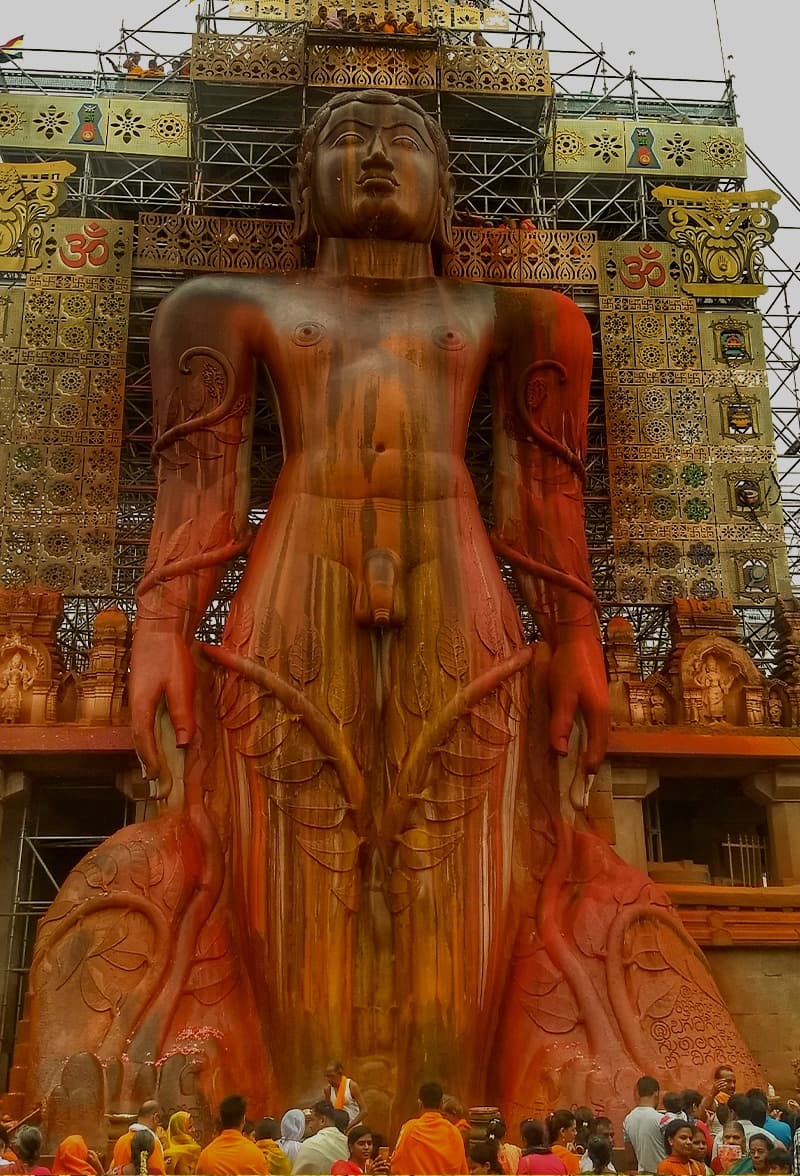
Picture a 57-foot granite figure standing calmly on a hilltop for over a thousand years. That’s the Gomateshwara Statue in Shravanabelagola. Most travelers plan a quick stop here. Then they climb the stairs, see the statue up close, and end up staying far longer than they expected.
Quick Info
| Location | Vindhyagiri Hill, Shravanabelagola, Hassan District, Karnataka |
| Height | 57 feet (17.4 metres) |
| Built | Around 981 CE |
| Built by | Chavundaraya, minister of the Ganga dynasty |
| Material | Single block of granite |
| Steps to climb | Around 600 (barefoot) |
| Entry fee | Free |
| Timings | 6:00 AM to 6:30 PM, daily |
| Distance from Bengaluru | About 145 km |
| Nearest railway station | Hassan Junction (around 50 km) |
| Best time to visit | October to March |
| Famous festival | Mahamastakabhisheka (every 12 years; next in 2030) |
Why Every Karnataka Tourism Itinerary Should Include This Statue
Karnataka packs in temples, forts, and beaches. But nothing else in the state feels quite like this. The statue rises straight out of solid rock on top of Vindhyagiri Hill. No scaffolding holds it up. No separate pieces join together anywhere on it. One team of craftsmen carved the entire figure from a single block of granite over a thousand years ago, and it still stands exactly where they left it.
You don’t need to follow Jainism to feel something here. The statue’s face carries a stillness that photos never quite capture. Vines wrap around the legs. An anthill sits near the feet. Both details point to the same story: Bahubali stood in meditation for so long that nature grew around him while he stayed still.
Travelers often add this stop to a longer Karnataka tourism circuit that includes Belur, Halebidu, and Hassan. The statue works well as a half-day trip or a full day out, depending on how much time you give the climb and the surrounding sites.
The Legend Behind the Statue
Jain tradition tells the story of Bahubali, son of the first Tirthankara, Rishabhanatha. Bahubali and his brother Bharata fought over their father’s kingdom after Rishabhanatha renounced the throne. Bahubali won the battle easily. Then he gave up the crown anyway and walked away to seek spiritual liberation instead of ruling.
He stood in one spot for so long that vines climbed his legs and anthills formed near his feet. Eventually, he achieved moksha, or liberation from the cycle of rebirth. Jains built this statue centuries later to honor that act of renunciation and detachment from worldly power.
A minister named Chavundaraya commissioned the statue around 981 CE. Legend says his mother saw a giant vision of Bahubali in a dream and refused to eat until someone built a statue in his honor. Chavundaraya fulfilled her wish and created one of the tallest monolithic statues anywhere in the world.
Architecture and Craftsmanship
Sculptors carved the statue from a single block of granite, and the figure still stands 57 feet (17.4 metres) tall today. Builders placed it on top of Vindhyagiri Hill, where it faces the town below and catches the first light of morning.
The Gomateshwara Statue depicts Bahubali standing upright in a meditation posture called Kayotsarga. Sculptors added fine details around the figure: vines climbing the legs, anthills near the feet, and smaller carved figures of serpents and other creatures nearby. Every detail reinforces the same theme of stillness and detachment from the material world.
Engineers and historians still study how workers moved and shaped such a massive block of stone without modern tools. Most agree that skilled labor, careful planning, and sheer patience made the project possible over many years.
Getting to Shravanabelagola
Shravanabelagola sits about 145 km from Bengaluru and roughly 50 km from Hassan. Most travelers drive from Bengaluru, Mysore, or Hassan, since Shravanabelagola itself has no railway station.
- By road: Book a self-drive car, cab, or KSRTC bus from Bengaluru. The drive takes around three to three and a half hours.
- By train: Take a train to Hassan Junction, then hire a cab or catch a local bus for the remaining stretch.
- By air: Fly into Kempegowda International Airport in Bengaluru, then continue the journey by road.
Plan for a full day if you want to combine this trip with the Hoysala temples in Belur and Halebidu.
Climbing Vindhyagiri Hill: What to Expect
Around 600 stone steps lead up to the Gomateshwara Statue, and you’ll need to climb them barefoot. This rule applies to everyone, so carry socks if the stone gets too hot under the afternoon sun.
The climb takes about 30 to 45 minutes at a relaxed pace. Take breaks along the way and enjoy the view; the hill overlooks the town and the surrounding plains, and the scene improves with every few hundred steps. Elderly visitors can hire a palanquin, locally called a dholi, for the climb, though you should book this in advance during festival season.
Once you reach the top, you’ll pass through a stone gateway before the statue comes into full view. Nothing about the courtyard prepares you for the scale of the figure standing inside it. Many first-time visitors say the size hits them only once they stand directly beneath it.
The Mahamastakabhisheka Festival
Every twelve years, Jains from across the world gather for the Mahamastakabhisheka, a grand head-anointing ceremony. Devotees pour milk, saffron water, sandalwood paste, and flower petals over the Gomateshwara Statue from a specially built platform behind it.
The last Mahamastakabhisheka took place in 2018, and the next one falls in 2030. If your travel dates line up with the festival, book your accommodation early. The town fills up fast, and hotels in Hassan run out of rooms weeks in advance.
Even outside festival years, the site holds daily rituals and regular prayers. Many pilgrims visit specifically for these smaller ceremonies rather than the twelve-year event.
Best Time to Visit
Visit between October and March, when the weather stays cool and comfortable for the barefoot climb. Summer months turn the stone steps scorching hot by mid-morning, so avoid climbing after 10 AM if you visit between March and May.
Early mornings work best throughout the year. You’ll beat both the crowds and the heat, and the morning light hits the Gomateshwara Statue beautifully around sunrise. Weekday visits also help you avoid the larger weekend crowds that gather at the base of the hill.
Nearby Places to Explore
Combine your visit with these nearby sites to make the most of your trip:
- Belur and Halebidu: These towns hold intricately carved Hoysala temples, and both sit within a two-hour drive.
- Hassan: This town works well as a comfortable base, with hotels, restaurants, and easy access to other historical sites.
- Chandragiri Hill: This second hill in Shravanabelagola holds older Jain monuments and stone inscriptions worth exploring.
Tips for a Smooth Visit
- Carry a small towel or thick socks to protect your feet on hot stone steps.
- Wear light, comfortable clothing since the climb takes real effort.
- Carry drinking water, since the climb has no shops along the way.
- Respect the site’s religious significance and dress modestly throughout your visit.
- Avoid the peak noon hours during summer months.
- Start early if you want good photos without a crowd in the frame.
Conclusion
The Gomateshwara Statue rewards anyone willing to climb 600 steps for it. You don’t need a religious reason to visit here; the scale, the history, and the sheer craftsmanship earn the trip on their own. Add Shravanabelagola to your Karnataka tourism itinerary, and give yourself a full morning to take it in properly. Once you stand beneath that quiet granite face, you’ll understand why people travel from across the world just to see it.
FAQ’s
How tall is the Gomateshwara Statue?
The statue stands 57 feet, or 17.4 metres, tall, and sculptors carved it from a single block of granite.
Who built the Gomateshwara Statue?
Chavundaraya, a minister in the Ganga dynasty, commissioned the statue around 981 CE.
Is there an entry fee for the statue?
No, entry to the Gomateshwara Statue and its temple complex stays free for every visitor.
How many steps do I need to climb?
You’ll climb around 600 stone steps to reach the statue, and you must go barefoot throughout.
When is the next Mahamastakabhisheka festival?
The next Mahamastakabhisheka festival takes place in 2030, twelve years after the 2018 ceremony.
What is the best time to visit Shravanabelagola?
Visit between October and March for cooler weather and a far more comfortable climb.