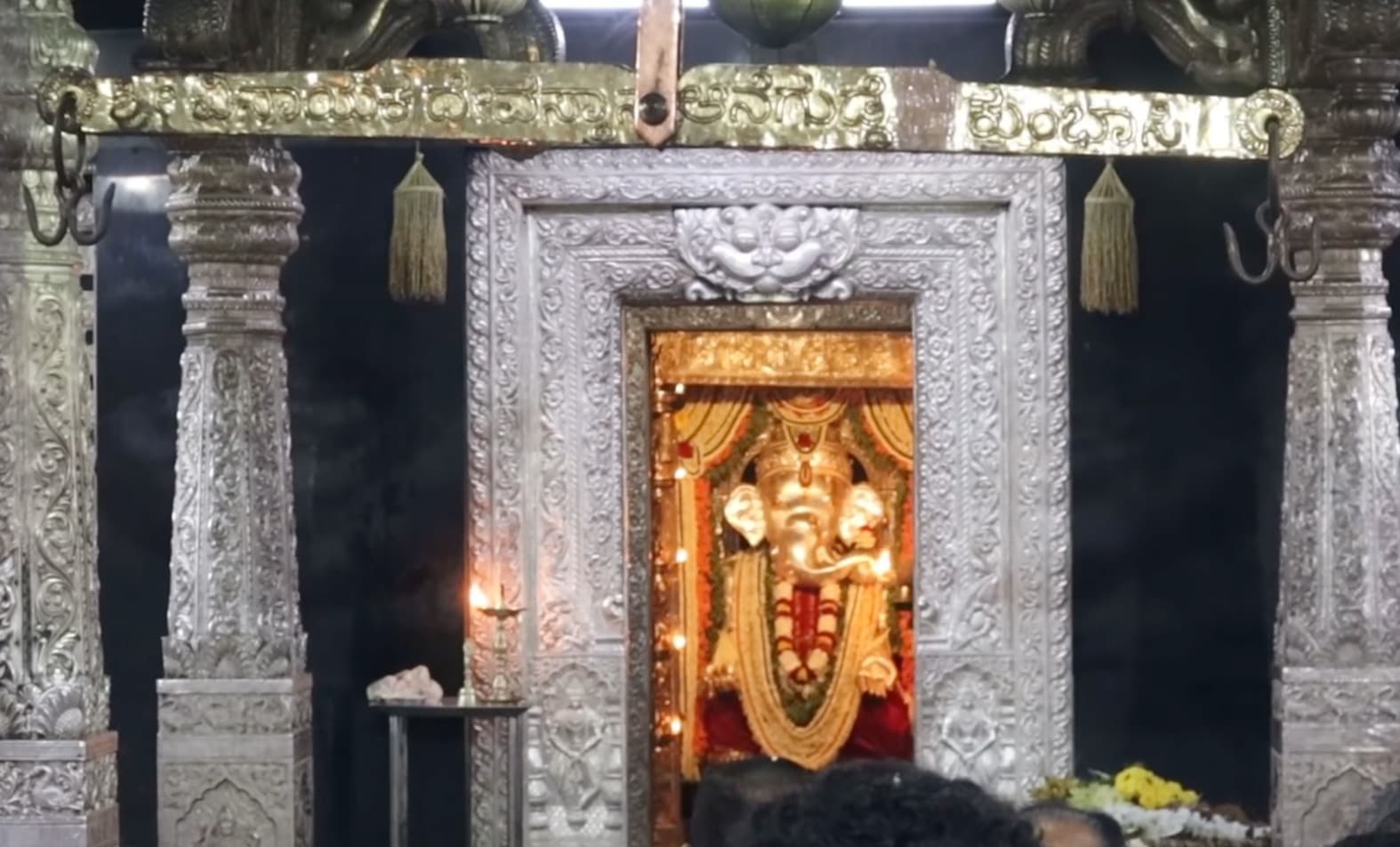
Drive along NH-66 between Udupi and Kundapura, and you will spot a small hill rising above the coconut groves near Kumbhashi village. Climb it, and you reach one of coastal Karnataka’s most loved temples: the Anegudde Sri Vinayaka Temple. Devotees travel here from across the state to stand before a Ganesha idol they believe formed on its own, inside solid rock, without a sculptor’s chisel ever touching it. This guide walks you through the temple’s story, its rituals, and everything you need to plan a smooth visit.
Quick Info
| Temple Name | Anegudde Sri Vinayaka Temple (also called Kumbhasi Ganapathi Temple) |
| Deity | Lord Vinayaka (Ganesha), worshipped as a self-manifested (Swayambhu) stone idol |
| Location | Kumbhashi village, Kundapura Taluk, Udupi District, Karnataka 576257 |
| Distance from Udupi | Around 25-30 km |
| Distance from Kundapura | About 9 km |
| Distance from Mangaluru | Roughly 85-90 km |
| Nearest Railway Station | Kundapura, about 8-12 km away |
| Nearest Airport | Mangaluru International Airport, around 87 km away |
| Darshan Timings | 5:30 AM to 9:00 PM (subject to change on festival days) |
| Main Festival | Ganesha Chaturthi, plus the annual Rathotsava in the Margashira month (December) |
| Best Time to Visit | October to March, with early mornings ideal for a quiet darshan |
| Entry Fee | Free, with optional paid sevas and Tulabharam offerings |

The Legend Behind Anegudde
The name itself tells half the story. ‘Aane’ means elephant in Kannada, and ‘gudde’ means hillock, so Anegudde translates simply to elephant hill, a nod to the elephant-headed god who presides over it. Locals also call the surrounding village Kumbhashi, and that name carries its own tale.
According to the legend, a severe drought once struck this coastal stretch, and Sage Agasthya arrived to perform a yagna, praying to Varuna, the rain god, for relief. A demon named Kumbhasura tried to disrupt the ritual and torment the sages gathered there. Bheema, the second of the five Pandava brothers from the Mahabharata, stepped in to protect them. Lord Ganesha is said to have handed Bheema a sword for the fight, and Bheema used it to kill the demon right at this spot. The place took the demon’s name and became Kumbhashi, while the hill where Ganesha’s blessing arrived became sacred ground in its own right.
Anegudde also holds a place among the seven Mukti Sthalas, or Parashurama Kshetras, of coastal Karnataka, sites believed to have been reclaimed from the sea by the sage Parashurama. That lineage puts it in the same spiritual bracket as other revered coastal temples, and pilgrims often visit Anegudde as one stop in a longer temple circuit along this stretch of Karnataka.

A Rock That Devotees Believe Became the Deity
What sets Anegudde apart from most Ganesha temples is the idol itself. The murti here is Swayambhu, meaning devotees hold that it was not carved by human hands but emerged naturally, discovered as a rock already bearing the form of Ganesha. Over time, temple authorities covered the stone face with a gold mask and wrapped the body in silver armour to protect the original rock, while still keeping its sacred shape visible to devotees. The idol stands in an upright posture, unusual for Ganesha temples where a seated form is more common, and this standing figure has become one of the temple’s most recognisable features.
Inside the sanctum, the atmosphere stays quiet and unhurried even when the courtyard outside fills with visitors. Priests conduct daily rituals including abhisheka, alankara and archana, and the temple keeps a steady rhythm of prayer that runs from early morning until night.
Darshan Timings and Daily Sevas
The temple opens its doors at 5:30 AM and stays accessible to devotees until 9:00 PM, giving visitors a wide window to plan around. Sevas and special poojas run through the day, and priests perform Ganahoma and Mahapuja as part of the regular schedule. On Ekadashi, when Ganahoma-related services pause, the temple shifts these rituals to the following day, Dwadashi, so it is worth checking the schedule if your visit falls on that date.
A large dining hall on the premises serves free Anna Prasada to visitors, with space to seat close to a thousand people at a time. Many families make it a point to eat here after darshan, and the meal, simple rice, sambar and rasam cooked temple-style, is part of the whole experience rather than an afterthought.
One tradition unique to Anegudde is Tulabharam, where devotees offer items such as coconut, jaggery, sugar or rice equal to their own body weight, placed on a large weighing scale as a form of thanksgiving. Families also book Rangapuja and other special sevas for milestones and wishes they hope Ganesha will grant.
Festivals That Bring the Hill Alive
Ganesha Chaturthi
This is the temple’s biggest occasion by far. The days around Ganesha Chaturthi pull in crowds from across Udupi, Mangaluru and beyond, and the hill practically glows with lamps and decoration through the celebration.
Sankashti Chaturthi
Falling every lunar month, Sankashti Chaturthi draws a steady stream of regular devotees who treat this monthly date as their fixed appointment with Ganesha.
Rathotsava
Held during the Margashira month, usually in the first week of December, the Rathotsava or car festival is a spectacular sight. The temple deity is taken out in a decorated chariot, pulled through the streets by hundreds of devotees, and the event draws some of the largest crowds of the year outside of Ganesha Chaturthi.
How to Reach Anegudde Vinayaka Temple
By Road
The temple sits right along NH 66, the highway connecting Mangaluru and Goa, which makes it an easy stop if you are driving along the coast. Regular buses connect Kumbhashi to Udupi, Kundapura and Mangaluru, and taxis are easy to arrange from any of these towns. From the Kumbhashi bus stand, you can either climb the stairs up the hill or take a short auto-rickshaw ride to the temple entrance.
By Rail
Kundapura railway station is the closest, roughly 8 to 12 km from the temple, and several trains on the Konkan Railway route stop here. From the station, local buses and autos cover the remaining distance comfortably.
By Air
Mangaluru International Airport is the nearest airport, about 87 km away, with regular domestic flights connecting it to major Indian cities. From the airport, you can hire a taxi or take a connecting bus toward Udupi and onward to Kumbhashi.
Best Time to Visit
October through March brings the most pleasant weather to this part of the coast, with lower humidity and clear skies that make the hillside climb far more comfortable. If you visit during the monsoon months between June and September, expect heavy rain typical of coastal Karnataka, though the temple stays open and the surrounding greenery looks stunning. For a peaceful darshan without long queues, arrive right at opening time between 6:00 and 8:00 AM, well before the day’s crowds build up.
Places to Visit Near Anegudde
A trip to Anegudde pairs naturally with a few other spots in the region, so consider building a full day or two around it.
- Kollur Mookambika Temple: One of Karnataka’s most visited pilgrimage sites, roughly an hour’s drive from Anegudde, dedicated to Goddess Mookambika.
- Maravanthe Beach: A striking stretch where the Arabian Sea and the Souparnika River run parallel to each other, separated only by the highway.
- Kundapura Town: A short hop away, useful for local markets, seafood, and everyday coastal-Karnataka life.
- Hattiangadi Siddhivinayaka Temple: Another old Ganesha shrine near Kundapura, worth combining with Anegudde on a temple-focused itinerary.
- Marne Falls and Someshwara Wildlife Sanctuary: Options for travellers who want to add a nature detour to the trip.
Visitor Tips for a Smooth Trip
- Dress modestly and be ready to remove footwear before entering the temple premises; racks are provided near the entrance.
- Carry cash for sevas and the Tulabharam offering, since card payments are not always available at every counter.
- Weekdays see noticeably thinner crowds than weekends and festival dates, so plan accordingly if you prefer a quieter visit.
- Combine the visit with an early breakfast in Kundapura town before heading up, since food options near the temple itself are limited outside prasada timings.
- Keep monsoon footwear handy if you are travelling between June and September, as the hillside path can get slippery.
Conclusion
Anegudde works precisely because it does not try too hard. There are no elaborate towers competing for attention, no crowds pushing past each other for a rushed glimpse of the deity. What you get instead is a quiet hilltop, a story that stretches back to the Mahabharata, and an idol that generations of devotees insist chose its own form. Whether you arrive as a pilgrim seeking blessings or a traveller curious about coastal Karnataka’s temple culture, the short climb up Anegudde hill rewards you with both a view and a story worth carrying home.
FAQ’s
Where is Anegudde Vinayaka Temple located?
It sits in Kumbhashi village, Kundapura Taluk, in Udupi district, right along NH 66 between Udupi and Kundapura.
What is special about the Ganesha idol at Anegudde?
The idol is Swayambhu, believed to have appeared naturally in rock form rather than being carved. It stands upright, which is uncommon among Ganesha idols, and is now covered with a gold mask and silver armour to protect the original stone.
What are the temple’s darshan timings?
The temple opens at 5:30 AM and remains open until 9:00 PM daily, though timings can extend or shift slightly on festival days.
How far is Anegudde from Udupi city?
The temple is about 25 to 30 km from Udupi, roughly a 40 to 45 minute drive by road.
Which is the main festival celebrated here?
Ganesha Chaturthi is the biggest celebration at Anegudde, drawing the largest crowds of the year, followed closely by the Rathotsava held in December.
Is there a facility for food at the temple?
Yes, the temple serves free Anna Prasada in a dining hall that can seat close to a thousand devotees at once.
What is Tulabharam, and can any devotee do it?
Tulabharam is a traditional offering where a devotee’s body weight in items like jaggery, coconut or rice is offered to the deity. Any devotee can request this seva at the temple counter.
How do I reach Anegudde by public transport?
Take a train or bus to Kundapura, then a local bus or auto-rickshaw to Kumbhashi. Direct buses also run from Udupi and Mangaluru to Kumbhashi.
Is there an entry fee for the temple?
General darshan is free. Devotees only pay for optional special sevas, poojas or Tulabharam offerings.
What other places can I visit near Anegudde in the same trip?
Kollur Mookambika Temple, Maravanthe Beach, Kundapura town and the Hattiangadi Siddhivinayaka Temple all sit within a short drive and pair well with an Anegudde visit.