Quick Info
| Location | Mandya District, Karnataka – 5 km from Mysore | 130 km from Bangalore |
| Best Time to Visit | October to March |
| Ideal Duration | One full day |
| Entry | Free at most sites | Nominal fees at museums |
Some places carry the weight of history in every stone, every temple bell, and every stretch of river. Srirangapatna, Karnataka, is one such place. Located inside a river island formed by the Kaveri, this small town holds temples that are over a thousand years old, a fort that saw the last stand of a warrior king, and a river that pilgrims and travelers both love to sit beside.
It sits just 15 kilometres from Mysore and around 125 kilometres from Bangalore. Yet, most people pass through it without realising how much is packed into this island. This guide covers everything you need to plan a proper visit, including the temples, the fort, the river, the timings, and the travel tips.
History of Srirangapatna
Srirangapatna takes its name from the Sri Ranganathaswamy Temple, which was consecrated around 984 CE. The town sits on a river island formed by the Kaveri, a natural fortress that rulers across centuries found impossible to ignore.
The Vijayanagara Empire made it the seat of a major viceroyalty. When Mysore’s rulers declared independence, Srirangapatna was their first target. Raja Wodeyar I captured it in 1610, and it became central to the Mysore kingdom from that point.
The town reached its most dramatic chapter under Hyder Ali and his son Tipu Sultan. Tipu made Srirangapatna the capital of Mysore and built his power base here. On May 4, 1799, British forces under Arthur Wellesley stormed the fort in a surprise assault. Tipu Sultan was killed in the battle. That date effectively ended the Mysore Wars and changed the course of South Indian history.
Today, Srirangapatna’s historic monuments are on the tentative list for UNESCO World Heritage Site status, a recognition of just how layered and significant this place is.
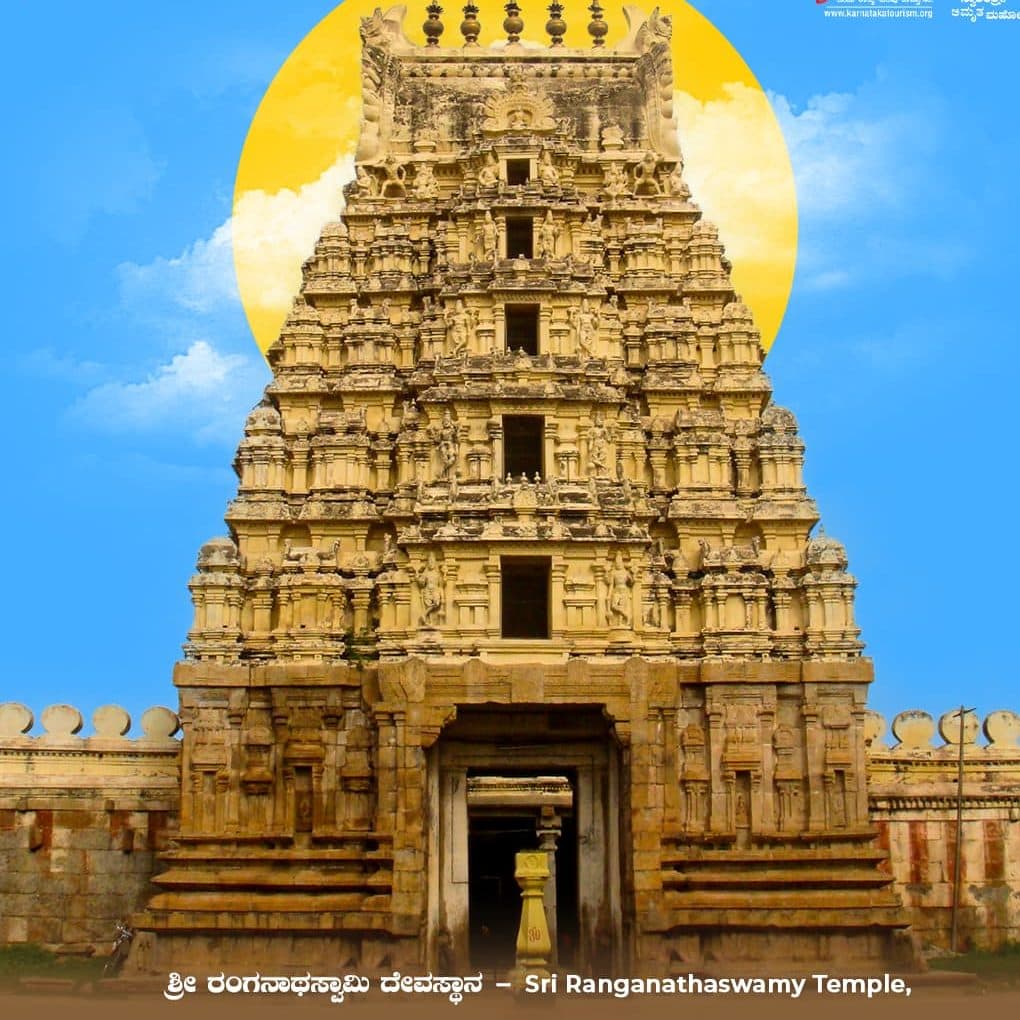
Sri Ranganathaswamy Temple, Srirangapatna
This is the heart of Srirangapatna. The Sri Ranganathaswamy Temple is one of the most important Vaishnavite shrines in South India. It sits inside the fort, on the banks of the Kaveri, and has been a pilgrimage site for over a thousand years.
The temple is one of the Pancharanga Kshetras, five sacred temples dedicated to Lord Ranganatha along the Kaveri. The deity here is called Adi Ranga (the first Ranga). Inside the sanctum, Lord Vishnu rests on the seven-headed Adishesha in a reclining posture, the largest such idol in Karnataka.
The architecture reflects several royal periods. Vijayanagara carvings, Hoysala craftsmanship, and Wodeyar patronage all come together here. The Archaeological Survey of India protects this temple as a monument of national importance.
Both Hyder Ali and Tipu Sultan held this temple in high regard, even as their power dominated the town around it. That history makes the temple all the more fascinating to explore.
Timings: 7:00 AM to 1:30 PM and 4:00 PM to 8:30 PM (all days)
Entry Fee: Free
Dress Code: Men: shirt and pants or dhoti. Women: saree, half-saree, or salwar. Modest dress is expected.
Tip: Visit on weekdays to avoid long queues. Festival days draw very large crowds
Nimishamba Temple Srirangapatna
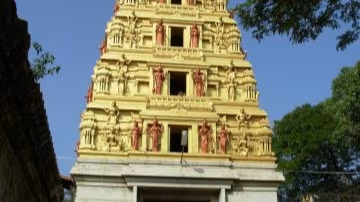
About 2 kilometres from the Srirangapatna bus stand, on the road leading to Sangam, sits the Nimishamba Temple. It is perched on the banks of the Kaveri, at a slightly elevated point where the river looks particularly beautiful.
The goddess here is Nimishamba, a form of Parvati. The name comes from the word “Nimisha,” which means one minute. The belief is that Goddess Nimishamba grants the prayers of devoted worshippers in just a minute. Pilgrims come here with personal wishes, especially around marriage, health, and family matters.
The temple was built around 400 years ago during the reign of the Wodeyars of Mysore. It has a seven-tiered Rajagopuram and a serene courtyard. A Srichakra carved on stone sits before the main deity. The temple is also known for an unusual practice: a brass bell is rung after placing food (bali bhojanam) for crows, and the crows arrive in an orderly way to eat. Locals consider this a small miracle.
The river beside the temple has shallow waters, and many visitors dip their feet or take a ceremonial bath at the ghats below.
Timings: 6:00 AM to 8:30 PM, all days
Entry Fee: Free
Key Festivals: Nimishamba Jayanthi, Navaratri, Shivaratri, Ugadi, Deepavali
Srirangapatna Fort and Tipu Sultan’s Legacy
The Srirangapatna Fort is the centrepiece of the town’s history. It started as a mud fort in the 15th century under the Vijayanagara Empire. Over the decades, it was rebuilt and strengthened by successive rulers. Tipu Sultan made his most significant additions, bringing in French architects to fortify it against British cannon fire.
The fort has a double-wall defence system and four main gates, named after Bangalore, Mysore, Delhi, and the Water Gate. There are seven exit points and two dungeons in the lower chambers where captured British officers were held.
Inside the fort, you will find the Sri Ranganathaswamy Temple, the Jumma Masjid built by Tipu Sultan, and an obelisk that marks the exact spot where Tipu was killed on May 4, 1799. Standing at that spot is a strangely quiet experience.
Just outside the fort is the Gumbaz, the mausoleum of Hyder Ali, Tipu Sultan, and Tipu’s mother. It is one of the finest examples of Indo-Islamic architecture in Karnataka, with a distinctive dome and carefully carved black stone pillars.
Tipu Sultan’s Summer Palace, known as Daria Daulat Bagh, sits about a kilometre from the fort. This teak-wood palace, built between 1778 and 1784, has painted frescoes showing Tipu’s battles and court life. It also houses a small museum with artefacts from his era.
Fort Timings: 8:30 AM to 5:30 PM, all days
Entry Fee: No entry fee for the fort
Gumbaz Timings: 8:00 AM to 6:30 PM, all days
Summer Palace Timings: 8:30 AM to 5:30 PM, all days (closed on Fridays)
Srirangapatna Ghat and River Kaveri Experiences
The Kaveri surrounds Srirangapatna, turning the entire town into a river island. This makes the ghats here feel different from any other place; the river is everywhere, and its presence shapes the whole mood of the town.
The most visited ghat is the Sangam point, where two branches of the Kaveri meet. Pilgrims come here for ritual dips, especially on auspicious days. The water is calm in most places, making it pleasant to sit beside, even if you just want to rest.
Coracle rides are popular on the Kaveri. Locals take tourists across the river in these round, basket-like boats. It is a short ride but memorable, especially at sunrise or just before sunset.
The river is also home to freshwater crocodiles in some stretches, though encounters are rare. Birdwatchers enjoy the quieter parts of the riverbank. The Ranganathittu Bird Sanctuary, Karnataka’s largest bird sanctuary, is just 3 kilometres away and is directly linked to the river ecosystem.
A “Spiritual Island” (Adi Ranga)
Srirangapatna is a natural river island formed by the Kaveri. In Hindu tradition, it is the first and most important of the Pancharanga Kshetras (Five Ranganatha sites along the Kaveri).
Adi Ranga
The temple deity is known as Adi Ranga (The First Ranga).
The “Tri-Ranga” Pilgrimage
Deeply devout pilgrims attempt to visit three Ranganatha temples – Srirangapatna (Adi Ranga), Shivanasamudra (Madhya Ranga), and Srirangam (Antya Ranga) – all in a single day between sunrise and sunset. This island town is the starting point of that sacred journey.
Top Places to Visit in Srirangapatna
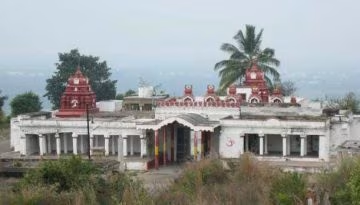
Karighatta Temple
A hilltop temple dedicated to Lord Srinivasa, a few kilometres from town, with good views.
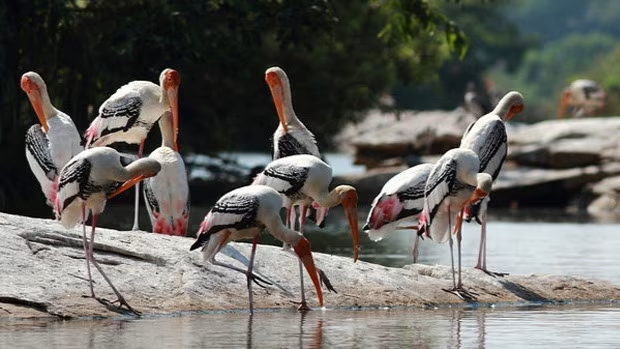
Ranganathittu Bird Sanctuary
3 km from Srirangapatna, home to painted storks, open-billed storks, egrets, and even crocodiles. Best visited from October to June.
Sangam
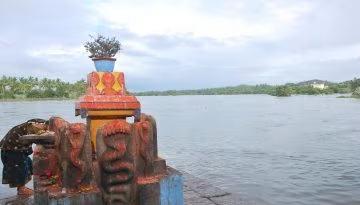
The point where two branches of the Kaveri meet. Popular for ritual baths and peaceful sitting by the water.
Jumma Masjid (Masjid-e-Ala)
Built inside the fort by Tipu Sultan, with distinctive minarets and a clean Indo-Islamic design.
Balmuri & Yedamuri Falls
Technically about 10–12 km away, these are man-made check-dams on the Kaveri. They are incredibly popular for a quick splash in the water and are often used in South Indian film shoots. They make for a perfect afternoon picnic spot.
Things to Do in Srirangapatna
- Temple hopping – Start at Sri Ranganathaswamy early in the morning for a peaceful darshan.
- History walk – Follow the trail from the fort to the Gumbaz to the Summer Palace.
- Coracle riding – Take a short ride on the Kaveri in a round bamboo boat.
- Birdwatching at Ranganathittu – Spot rare migratory birds just a short drive away.
- Riverside sitting – Spend quiet time at the Sangam or near the Nimishamba ghat.
- Photography – The fort walls, the Gumbaz dome, and the river at sunset all make excellent shots.
- Local food – Try the roadside eateries around the temple for simple South Indian meals.
Best Time to Visit Srirangapatna
October to March is the best time to visit Srirangapatna. The weather is cool and dry, making it comfortable to walk between the fort, temples, and ghats. Temperatures stay between 15°C and 28°C during these months.
April to June is hot, with temperatures sometimes crossing 35°C. Outdoor exploration becomes tiring. July to September brings the monsoon. The Kaveri rises, the ghats go underwater, and some areas become inaccessible. However, post-monsoon October is a great time; the river is full and beautiful, and the surroundings turn green.
Avoid visiting during major festival weekends at the temple if you dislike crowds. Brahmotsava and other Vaishnava festivals draw thousands of pilgrims.
How to Reach Srirangapatna
Srirangapatna is well-connected and easy to access.
Distance:
- Bangalore to Srirangapatna distance: ~125 km
- Mysuru: ~15 km
By Road:
You can drive via NH routes from Bengaluru or Mysuru. The journey is smooth and scenic.
By Train:
Srirangapatna has a small railway station, but most trains stop at Mysuru.
By Air:
The nearest domestic airport is in Mysuru (Mandakalli), while Kempegowda International Airport in Bengaluru is around 3.5 to 4 hours away by road.
Where to Stay in Srirangapatna
Srirangapatna is a day-trip destination for most visitors coming from Bangalore or Mysore. That said, a few guesthouses and budget stays are available in and around town.
Most travellers prefer to base themselves in Mysore (15 km away) and visit Srirangapatna as a day trip. Mysore offers a much wider range of hotels at every budget. If you want to experience the town at sunrise, especially the early morning temple bell at Sri Ranganathaswamy, staying overnight in Srirangapatna or close to it makes sense.
Places to Visit Near Srirangapatna
Mysore (15 km) – The Mysore Palace, Chamundi Hills, Brindavan Gardens, and Devaraja Market are all a short drive away.
Ranganathittu Bird Sanctuary (3 km) – Karnataka’s largest bird sanctuary, easily combined with a Srirangapatna visit.
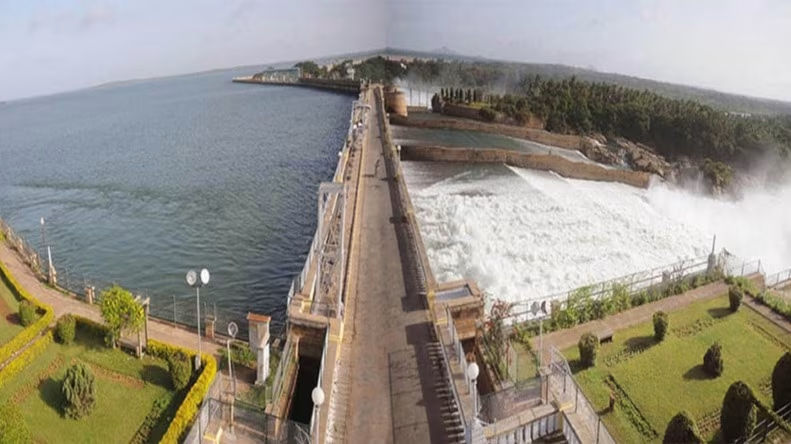
KRS Dam / Krishnaraja Sagar (12 km) – The Brindavan Gardens at this dam are particularly beautiful at night when fountains are lit.
Somnathpur (35 km) – The Chennakesava Temple here is a near-perfect example of Hoysala architecture.
Melukote (51 km) – A sacred hill town with the ancient Cheluvanarayana Swamy Temple and bird sanctuary.
Shivanasamudra Falls (60 km) – One of India’s largest waterfalls, worth a half-day trip.
Travel Tips for Visiting Srirangapatna
- Start your day early.
- Wear modest clothes.
- Carry water and snacks.
- Photography rules vary. Cameras are generally allowed outside. Check before photographing inside the temple sanctum.
- Hire a local guide for the fort.
- Combine with Mysore. One day is usually enough for Srirangapatna.
- Go on a weekday. Weekends at the temple and fort get very busy. A Tuesday or Wednesday visit is far more peaceful.
Conclusion
Srirangapatna does not need much convincing. A thousand-year-old temple, a fort that changed history, a goddess who answers in a minute, and the Kaveri flowing quietly around it all, this small island town carries more weight than places ten times its size.
One day is all it takes. Come early, stay curious, and let Srirangapatna do the rest.
FAQ
What is Srirangapatna famous for?
Srirangapatna is famous for its historical importance as Tipu Sultan’s capital, its ancient temples, and scenic river surroundings.
What are the timings of Ranganathaswamy Temple in Srirangapatna?
The temple is open from 7:00 AM to 2:00 PM and from 4:00 PM to 8:00 PM.
How far is Srirangapatna from Bangalore?
It is approximately 125 km from Bengaluru and takes about 2.5 to 3 hours by road.
What are the best places to visit in Srirangapatna?
Top places include the Ranganathaswamy Temple, Nimishamba Temple, Srirangapatna Fort, and Ranganathittu Bird Sanctuary.
What is the significance of Nimishamba Temple?
Devotees believe Goddess Nimishamba fulfils wishes instantly.
What is the best time to visit Srirangapatna?
October to March offers the most pleasant weather.
Can Srirangapatna be covered in one day?
Yes, you can comfortably explore the main attractions in one day.
What is the history of Srirangapatna Fort?
The fort served as the capital stronghold of Tipu Sultan and played a key role in the Anglo-Mysore Wars.
Is Srirangapatna a UNESCO World Heritage Site?
No, it is not currently a UNESCO World Heritage Site.
What are the places to visit near Srirangapatna?
Places near Srirangapatna to visit include Mysuru, Chamundi Hills, Brindavan Gardens, and Talakadu, which are popular nearby destinations.