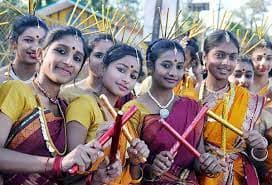
Where rhythm meets community, and every tap of the stick tells a story passed down through generations.
Karnataka is a land where tradition breathes through its soil, in its temples, its harvest fields, and its village squares, alive with music and movement. Amidst its treasure chest of folk arts, one dance form stands apart for its infectious energy and communal spirit: Kolata. A celebration of rhythm, togetherness, and ancestral memory, Kolata has been enchanting audiences across the state for centuries. To witness a Kolata performance is to feel the pulse of rural Karnataka, raw, joyful, and magnificently alive.
What is Kolata?
Kolata is one of Karnataka’s most beloved traditional folk dances, performed with short wooden sticks in perfectly synchronised group formations. The name itself is rooted in Kannada, a beautiful compound of two elemental words:
| Kolu (ಕೋಲು) | Aata (ಆಟ) |
| Stick – the instrument of the dance | Play or dance – the spirit of it |
Dancers perform in groups, moving in circular formations while rhythmically tapping their sticks against their partners’. The resulting patterns of sound and movement are simultaneously a musical performance, a visual spectacle, and an act of communal storytelling. Men, women, and sometimes mixed groups all take part, making Kolata a truly inclusive expression of folk culture.
At its core, Kolata brings together three vital elements:
- Music & Song – Folk melodies sung live, weaving narrative through the dance
- Synchronised Dance – Circular formations and coordinated stick movements
- Oral Storytelling – Preserving community history and devotional tales through performance
Historical & Cultural Significance
Long before theatres or concert halls, the village square was the stage, and Kolata was the performance that gathered communities together under open skies.
Historically, the dance served purposes beyond pure entertainment. It marked harvests, appeased deities, celebrated weddings, and reinforced the social fabric of rural life. Elders taught the younger generations not just the steps but also the songs, rhythms, and stories embedded within them, making Kolata a living archive of Karnataka’s oral heritage.
The dance also carries a strong devotional character, often performed in honour of local deities and during temple festivals, bridging the earthly and the sacred through rhythm and movement.
When and Where is Kolata Performed?
Kolata graces Karnataka’s calendar at its most festive and sacred moments. From the grandeur of Dasara to the intimacy of a village jatre, the dance finds its stage wherever people gather in celebration:
- Dasara – Karnataka’s most magnificent state festival
- Temple festivals and religious processions
- Village fairs (Jatras) and local melas
- Harvest festivals celebrating agricultural abundance
- School events and state cultural programmes
Geographically, Kolata thrives across the length and breadth of Karnataka. It is particularly prominent in the rural heartlands of Mysuru, Dharwad & Ballari districts, with each region adding its own local flavour to the performance tradition.
Costumes, Music & Dance Style
A Kolata performance is a feast for all the senses. Every element, the colours worn, the instruments played, the formations danced, is carefully composed to create an experience of collective exhilaration.
| Costumes | Music | Dance Style |
|---|---|---|
| Vibrant sarees & dhotis | Live folk vocals | Circular formations |
| Turbans & waistbands | Dhol, the heartbeat drum | Synchronised stick taps |
| Traditional jewellery | Tabla rhythms | Fast, rhythmic footwork |
| Fresh flower adornments | Clashing cymbals | Call-and-response patterns |
The synchronised tapping of sticks creates a captivating polyrhythm that builds in intensity as the dance progresses. Performers move with an almost meditative precision, their footwork mirroring the drum beats while their sticks weave intricate percussive patterns in the air. The effect is mesmerising, a human machine of sound and colour spinning in perfect unison.
Types of Kolata
Like many living folk traditions, Kolata has branched into distinctive regional styles over the centuries. Two of the most recognised variations are:
| Jade Kolata | Bennu Kolata |
| Features interweaving formations and complex braiding patterns, where dancers move in and out of each other’s paths, creating spectacular visual symmetry. | A more vigorous style characterised by faster rhythms and higher-energy footwork, often performed during major festival occasions with larger groups. |
Each style differs in rhythm, spatial formations, thematic content, and number of participants – reflecting the rich diversity within this single tradition.
Kolata in Modern Karnataka
Far from fading into historical memory, Kolata continues to evolve and thrive in contemporary Karnataka. Cultural festivals, tourism showcases, and state-sponsored folk art programmes have given the dance renewed visibility and prestige. School competitions introduce Kolata to a new generation of young performers who bring fresh energy to ancient formations.
Karnataka’s Department of Kannada and Culture, along with dedicated folk art academies, actively works to document, preserve, and promote Kolata as part of the state’s intangible cultural heritage. Tourism initiatives increasingly feature Kolata performances as a window into Karnataka’s authentic folk soul, offering visitors an experience no museum exhibit could replicate.
Perhaps most encouragingly, young Kannadigas are reclaiming this tradition with pride. In villages and cities alike, Kolata is not a relic; it is a living, breathing expression of who they are.
More Than a Dance
Kolata is a symbol of unity, of joy, of a people’s insistence on keeping their stories alive through song and movement. Every circular formation, every synchronised stick tap, every folk song sung under a festival sky carries within it centuries of collective memory.
Karnataka’s folk heritage is vast and magnificent, but few traditions capture its spirit as vividly as Kolata. If you ever find yourself in Karnataka during Dasara or a village jatra, seek out a Kolata performance. Do not just watch, listen to the rhythm, feel the ground vibrate with footwork, and let it remind you that culture is not something locked in books or museums.