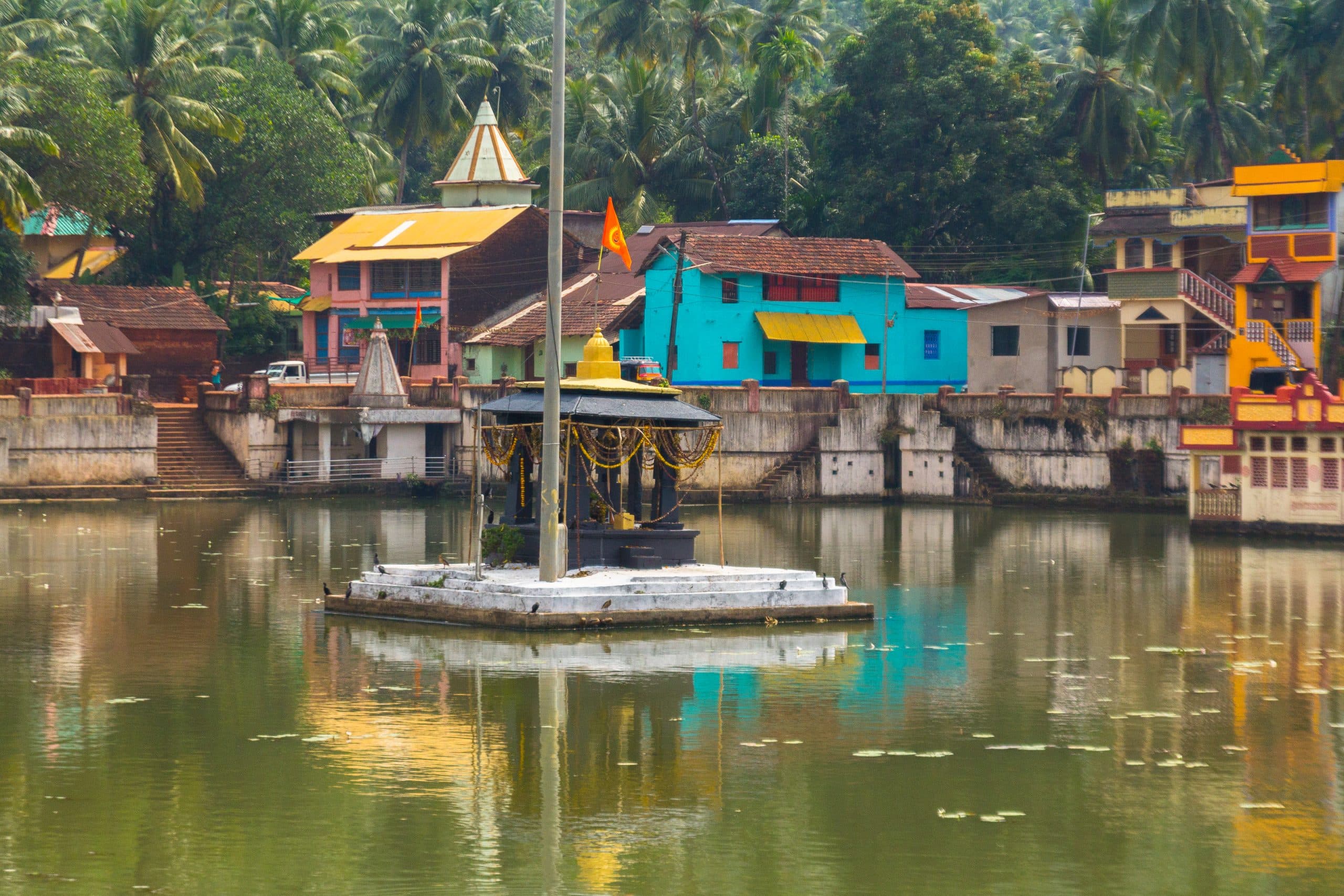
Located in the sacred town of Gokarna in Karnataka’s Uttara Kannada district, the Mahabaleshwar Temple is one of the most revered Shiva temples in India. The temple is one of Karnataka’s seven Muktisthalas and attracts devotees from across the country. Dedicated to Lord Shiva in the form of the Atmalinga, it remains the spiritual heart of Gokarna, while located in Karnataka, the temple is currently managed by an Overseeing Committee appointed by the Hon’ble Supreme Court of India.
Most Sacred Gokarna’s Shiva Temple
At the heart of the holy town of Gokarna stands the Mahabaleshwar Temple, one of the most revered Shiva temples in India. The temple is one of Karnataka’s seven sacred Muktisthalas and has been an important centre of pilgrimage for centuries. Often referred to as the “Dakshina Kashi” or the “Varanasi of the South,” it attracts devotees seeking blessings, spiritual fulfillment, and liberation.
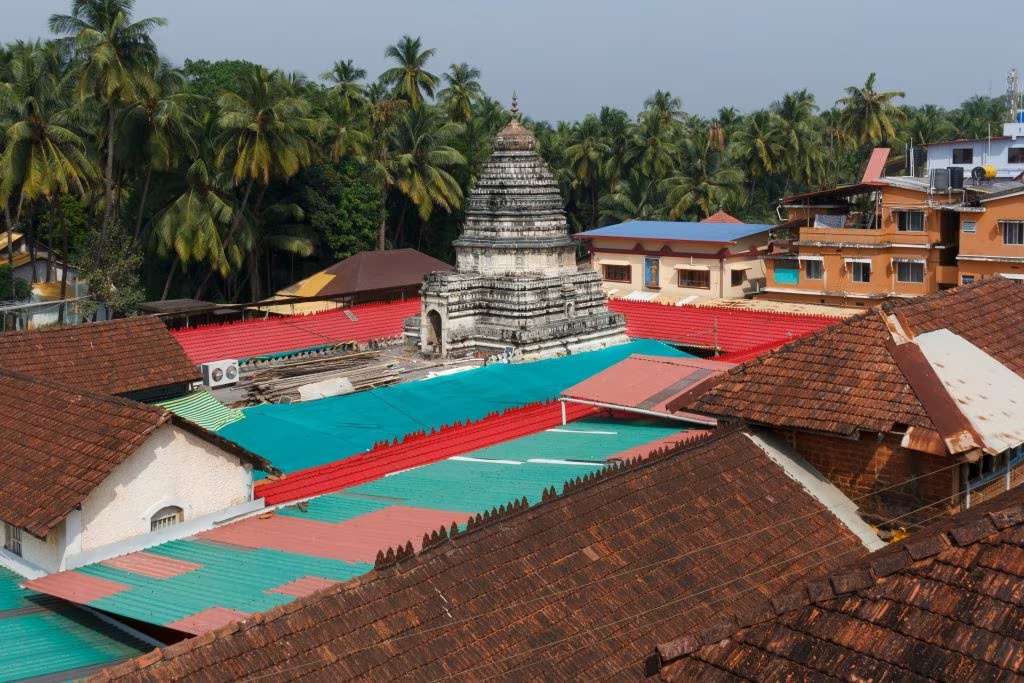
The temple’s spiritual importance stems from the presence of the sacred Atmalinga, believed to embody the divine essence of Lord Shiva. Its timeless traditions, daily rituals, and deep connection to Hindu mythology continue to make it one of Karnataka’s most significant pilgrimage destinations.
The Sacred Atmalinga
The spiritual gravity of the Mahabaleshwar Temple rests almost entirely on the extraordinary nature of its presiding deity: the Atmalinga.
According to Hindu tradition, Ravana performed intense penance to please Lord Shiva and received the sacred Atmalinga, along with Goddess Uma, as boons. Shiva instructed him not to place the Atmalinga on the ground before reaching Lanka.
To prevent Ravana from taking the divine linga away, Lord Vishnu created an artificial dusk near Gokarna. As Ravana stopped to perform his evening prayers, Lord Ganesha appeared as a young Brahmin boy and agreed to hold the Atmalinga. When Ravana failed to return before the boy’s third call, Ganesha placed it on the ground, where it became permanently embedded.
Despite his immense strength, Ravana could not lift the linga again, leading to its name, Mahabaleshwar, meaning “All-Powerful Lord.” Tradition also links Gokarna’s name to the shape of a cow’s ear (“Go” meaning cow and “Karna” meaning ear). The scattered fragments from Ravana’s failed attempts to remove the Atmalinga later became the sacred Panchalinga shrines along Karnataka’s coast.
The Atmalinga at Gokarna is not merely an image of Shiva; it is understood by devotees to be Shiva’s own divine soul made manifest in stone. Darshan here is considered equivalent to beholding the Lord himself.
“One of the most unique aspects of the Mahabaleshwar Temple is the tradition of Sparsha Darshan. Unlike many temples where the deity is viewed from a distance, devotees are permitted to enter the inner sanctum and physically touch the Atmalinga, a deeply personal and powerful experience.”
Is the Mahabaleshwar Temple Jyotirlinga?
The canonical twelve Jyotirlingas, the pillars of Shiva’s cosmic form, include Somnath, Mallikarjuna, Mahakaleshwar, Omkareshwar, Kedarnath, Bhimashankar, Viswanath, Trimbakeshwar, Vaidyanath, Nageshwar, Rameshwaram, and Grishneshwar.
Gokarna’s Mahabaleshwar Temple does not appear in this canonical list.
However, many scholars, priests, and devotional texts treat the Atmalinga as something of an even higher order: not a Jyotirlinga but the Atmalinga, uniquely singular, the only linga of this class in the world. The Skanda Purana explicitly states that the merit of visiting Gokarna equals or surpasses that of visiting all twelve Jyotirlingas combined.
History & Architecture of Mahabaleshwar Temple
The historical roots of the Mahabaleshwar Temple reach deep into antiquity. Inscriptional evidence and copper plate grants trace active royal patronage to at least the Kadamba dynasty (4th–6th centuries CE), who ruled coastal Karnataka from their capital at Banavasi. The Kadambas were ardent Shaiva devotees, and Gokarna, already ancient by their time, received generous donations of land, gold, and cattle from Kadamba kings.
The Vijayanagara Empire (14th–17th centuries) marked the temple’s most intensive phase of structural development. Vijayanagara records mention repeated renovations, the installation of mandapas (pillared halls), and the gifting of jewels and ritual implements to the shrine. Inscriptions in Kannada and Sanskrit from this period are embedded in the temple walls, testimony to the empire’s deep investment in the sacred geography of the coast.
Dravidian Architecture
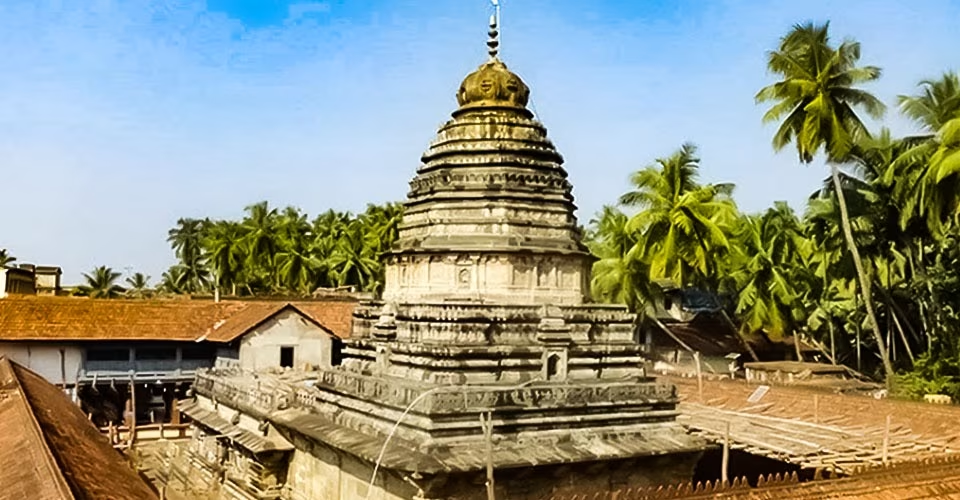
The Mahabaleshwar Temple is a fine example of Dravidian temple architecture, specifically in the Karnataka Dravida style that flourished under Vijayanagara patronage. Key architectural features include:
• The Rajagopuram (main tower): A tiered pyramidal tower rising above the entrance gate, its faces decorated with stucco figures of deities, celestial beings, and mythological scenes painted in the vivid polychrome palette characteristic of South Indian temple art.
•The Garbhagriha (sanctum sanctorum): The innermost chamber where the Atmalinga resides. The space is deliberately small and dark, focusing the devotee’s entire awareness on the linga. The atmosphere is thick with camphor smoke, the fragrance of bilva leaves, and the resonance of Vedic chants.
•The Antarala (vestibule): A narrow transitional chamber connecting the sanctum to the main hall, decorated with relief carvings of Shaiva iconography.
•The Navaranga Mandapa: The main pillared hall supported by intricately carved stone columns. The ceiling features decorative plasterwork, and the columns bear sculptures of Shiva, Parvati, Ganesha, and celestial apsaras.
•The Prakara (enclosure wall): The outer compound wall encircles the main temple and several subsidiary shrines, including those dedicated to Parvati, Subrahmanya, and Ganesha.
The stone used is primarily the laterite and schist typical of coastal Karnataka, and the temple has survived centuries of humid monsoon climate largely intact, a testament to the quality of its original construction and the continued care of its hereditary priestly community.
Darshan Timings, Entry & Visitor Guidelines
Planning your visit around the temple’s schedule is essential. The Mahabaleshwar Temple follows a twice-daily darshan schedule common to major South Indian temples:
| Session / Detail | Timing / Information | Notes |
| Morning Session | 6:00 AM – 12:30 PM | Abhisheka begins at dawn |
| Afternoon Break | 12:30 PM – 5:00 PM | Temple closed; priests’ rest time |
| Evening Session | 5:00 PM – 8:00 PM | Mangalarti at 8 PM |
| Open Days | All days of the week | No weekly closure |
| Entry Fee | Free of charge | No ticket required |
| Special Note | Extended hours on Shivaratri & Mondays | Arrive early to avoid queues |
Note: Timings can shift marginally on festival days, ekadashi, Pradosham, and Monday (Somavara), which is sacred to Shiva. Always confirm with the temple office or local priest before travelling long distances.
Step-by-Step Darshan Ritual Sequence
First-time pilgrims benefit greatly from understanding the customary sequence of rituals within the temple:
1. Begin at the Maha Ganapati Temple, located just outside the main Mahabaleshwar entrance.
2. Proceed to the Chandrashala (the sacred tank) or a nearby water source to perform achamana (sipping of water for ritual purification).
3. Enter the main temple through the eastern gopuram gate.
4. Circumambulate (pradakshina) the outer prakara at least once in a clockwise direction.
5. Join the darshan queue for the inner sanctum. Remain silent or chant ‘Om Namah Shivaya’ quietly.
6. Before the linga, offer bilva (bael) leaves, flowers, and if permitted, pour water or milk abhisheka.
7. Receive prasad, typically vibhuti (sacred ash) and kumkuma, from the attending priest.
Dress Code & Entry Rules
The Mahabaleshwar Temple maintains traditional codes of conduct:
• Men: Dhoti or lungi preferred in the inner sanctum; shirt may be removed before entering the garbhagriha as a mark of respect.
• Women: Saree, salwar kameez, or any traditional Indian attire. Revealing western clothing is discouraged. A dupatta or pallu covering the head is appreciated but not strictly enforced.
•Photography: Strictly prohibited inside the temple. Cameras, video equipment, and selfies within the sanctum area are not permitted.
•Non-Hindus: Entry for non-Hindus is generally permitted in the outer mandapa and common areas but may be restricted to the sanctum. Devotional intent and respectful conduct typically determine access. Visitors should check with the temple office upon arrival.
Rituals & Puja Services at Mahabaleshwar Temple
The temple offers a variety of daily and special pujas for devotees. Key rituals include:
- Rudrabhisheka– Sacred bathing of the Atmalinga with milk, honey, coconut water, and panchamrita, accompanied by Vedic chants. Commonly performed for health, prosperity, and special occasions.
- Sahasranama Archana– Chanting the thousand names of Lord Shiva with flower offerings for blessings and spiritual well-being.
- Laghu Rudra & Maha Rudra– Elaborate forms of Rudrabhisheka performed by multiple priests with repeated chanting of the Sri Rudram.
- Nakshatra Puja– Special worship based on a devotee’s birth star, performed for peace and prosperity.
- Narayan Bali– Important ancestral ritual performed for souls of those who passed away under difficult circumstances.
- Pitru Tarpana– Ritual offerings for departed ancestors, especially observed on Amavasya and during Pitru Paksha.
Pujas can be booked through the temple office or authorised agencies in Gokarna. Advance booking is recommended during major festivals like Maha Shivaratri.
Panchalinga Yatra
The “Panchalinga Yatra” serves as a deeply significant pilgrimage circuit reflecting the rich mythological heritage of sacred Gokarna town. Devotees usually begin this local journey with a ritual purification bath at the sacred and holy Kotitirtha temple tank. Pilgrims then visit five key shrines within the town, typically completing this three-kilometer walking circuit barefoot before each noon.
This internal route includes the Mahabaleshwar, Maha Ganapati, Bhadrakali, Tamra Gauri, and Sajjeshwar temples located in the spiritual heart. On a larger scale, this yatra also commemorates the legendary struggle involving Ravana and the sacred Shiva Atmalinga.
Tradition states that fragments of the divine linga scattered across the coast when Ravana tried to remove the stone. These five sacred locations include Gokarna, Sajjeshwar, Dhareshwar, Gunavanteshwar and Murudeshwar, which form the primary regional pilgrimage circuit for devotees.
Festivals & Special Events
The temple celebrates several major festivals throughout the year. Maha Shivaratri is the most important, attracting thousands of devotees for all-night worship and rituals. Karthika Masa is known for lamp offerings and special Shiva pujas, while Kumbhabhishekam is the grand temple reconsecration ceremony held once every twelve years. Pradosham evenings and Mondays are also considered highly auspicious for Shiva worship.
Maha Ganapati Temple & Associated Shrines
Located beside the Mahabaleshwar Temple, Maha Ganapati Temple is an important shrine dedicated to Lord Ganesha and the traditional first stop of the Panchalinga Yatra. Devotees visit for blessings related to education, success, and obstacle removal. The temple complex also includes smaller shrines dedicated to Parvati, Subrahmanya, and the sacred Nandi.
How to Reach Mahabaleshwar Temple
By Train– Gokarna Road Railway Station, about 9 km away, connects to cities like Mumbai, Goa, Mangalore, and Bengaluru. Autos and taxis are easily available from the station.
By Bus– Regular KSRTC and private buses operate from Bengaluru, Hubballi, Mangalore, Karwar, and nearby cities. The bus stand is close to the temple.
By Air– The nearest airports are Dabolim Airport and Mangalore International Airport. Taxis and cabs are available to Gokarna.
By Road– Gokarna is located on NH-66 and is well-connected by road from Goa, Bengaluru, Karwar, and Mangalore.
The temple is situated in Car Street (Rathotsava Beedi). Vehicles are not allowed near the temple, so visitors must walk about 10 minutes through the local bazaar area.
Best Time to Visit Gokarna Mahabaleshwar Temple
October to February (Best Time)– Pleasant weather, lush scenery, calm beaches, and comfortable temple visits make this the ideal season.
February to March (Maha Shivaratri Season)– Best time to witness grand Shivaratri celebrations, though crowds are very large.
March to May (Summer)– Hot and dry weather; early morning visits are recommended.
June to September (Monsoon)– Heavy rains create a scenic atmosphere, but travel and temple access can become challenging.
For a quieter spiritual experience, early morning visits during November or December are especially peaceful.
Conclusion
Mahabaleshwar Temple stands as one of India’s most spiritually significant Shiva shrines, drawing pilgrims and travellers with its sacred Atmalinga, ancient legends, and centuries-old traditions. From the powerful rituals of Rudrabhisheka and the Panchalinga Yatra to the grand celebrations of Maha Shivaratri, the temple offers a deeply immersive spiritual experience rooted in Shaiva heritage. Whether you visit for devotion, architecture, history, or the serene coastal atmosphere of Gokarna, the Mahabaleshwar Temple leaves a lasting impression of peace, faith, and timeless sacredness.
Mahabaleshwar Temple stands as one of India’s most spiritually significant Shiva shrines, drawing pilgrims and travellers with its sacred Atmalinga, ancient legends, and centuries-old traditions. From the powerful rituals of Rudrabhisheka and the Panchalinga Yatra to the grand celebrations of Maha Shivaratri, the temple offers a deeply immersive spiritual experience rooted in Shaiva heritage. Whether you visit for devotion, architecture, history, or the serene coastal atmosphere of Gokarna, the Mahabaleshwar Temple leaves a lasting impression of peace, faith, and timeless sacredness.
Frequently Asked Questions
Is the Mahabaleshwar Temple, Gokarna a Jyotirlinga?
The Mahabaleshwar Temple in Gokarna is not listed among the canonical twelve Jyotirlingas of India. However, it enshrines the Atmalinga, the divine soul of Shiva, which many devotional and scriptural traditions regard as even more sacred.
What is the Atmalinga at Gokarna?
The Atmalinga is a self-manifested (swayambhu) Shiva linga believed to contain the very soul or essence (atman) of Lord Shiva.
What are the Mahabaleshwar Temple darshan timings?
The temple opens daily from 6:00 AM to 12:30 PM for the morning session and from 5:00 PM to 8:00 PM for the evening session. It remains open all seven days of the week, including public holidays.
What is the dress code for Mahabaleshwar Temple Gokarna?
Men should wear a dhoti or lungi, especially when entering the inner sanctum; removing the shirt is a mark of traditional respect. Women are expected to wear a saree, salwar kameez, or similar traditional Indian attire.
How often does the Kumbhabhishekam happen at Gokarna?
The Kumbhabhishekam, the grand consecration ceremony, at the Mahabaleshwar Temple is performed approximately every 12 years, following the 12-year orbital cycle of Jupiter (Guru).
What is the Panchalinga Yatra from Gokarna?
The Panchalinga Yatra is a sacred pilgrimage circuit connecting the five lingas of Gokarna, Mahabaleshwar (the primary Atmalinga), Maha Ganapati, Sajjeshwar, Bhadrakali, and Tamra Gauri, all of which are said to have been formed from the Atmalinga when Ravana attempted to dislodge it.
Can foreigners visit Mahabaleshwar Temple?
Foreign visitors are generally permitted in the outer areas and mandapas of the Mahabaleshwar Temple. Entry to the innermost sanctum may be subject to the discretion of the managing priests, who typically assess devotional intent and conduct.
What puja rituals can be performed at Gokarna?
A wide range of Vedic rituals can be commissioned at the Mahabaleshwar Temple, including Rudrabhisheka (sacred bathing of the linga with milk, honey, and sacred substances), Sahasranama Archana (chanting of Shiva’s thousand names), Laghu Rudra and Maha Rudra (performed by multiple priests), Nakshatra Puja (birth-star ritual), and the Narayan Bali ritual for departed ancestors.
What is the best time to visit Mahabaleshwar Temple Gokarna?
October to February offers the most comfortable conditions: cool weather (20–28°C), clear skies, and a manageable crowd level. The Maha Shivaratri period (February–March) is the most spiritually intense time to visit, but comes with very large crowds and accommodation scarcity.
Is there free food at the Mahabaleshwar Temple in Gokarna?
The Mahabaleshwar Temple and the broader Gokarna temple circuit provide Annadanam (sacred free meal service) on certain festival days and auspicious occasions, funded by devotee donations.