It is 6 AM. The mist still clings to the treetops. Your jeep rolls slowly into a corridor of tall teak trees, and somewhere to your left, a chital freezes mid-step, ears up, eyes wide, watching you as carefully as you are watching it. Then, just like that, it bolts into the undergrowth. That moment, that fleeting exchange between you and the wild, is what Bandipur is all about.
Located about 215 km from Bengaluru and 80 km from Mysuru, Bandipur Wildlife Sanctuary lies at one of the most ecologically rich intersections in India. It is not just a national park; it is a living, breathing piece of the Western Ghats, where tigers, elephants, and thousands of other species go about their lives largely undisturbed. If you have been thinking about visiting, here is everything you need to know.
From a Maharaja’s Hunting Ground to a Tiger Reserve
Bandipur has a past that feels almost cinematic. In 1931, the Maharaja of Mysore set aside 90 square kilometres of forest as his private game reserve, calling it the Venugopala Wildlife Park. Back then, it was a hunting ground.
Things changed dramatically after India gained independence. By 1973, the forest became one of the original reserves under Project Tiger, India’s landmark effort to pull tigers back from the edge of extinction. The park was formally established in 1974, and in 1986, it became part of the Nilgiri Biosphere Reserve, now a UNESCO World Heritage Site. Today, Bandipur covers over 874 square kilometres and counts among India’s most important wildlife sanctuaries.
The Wildlife: Who Lives Here?
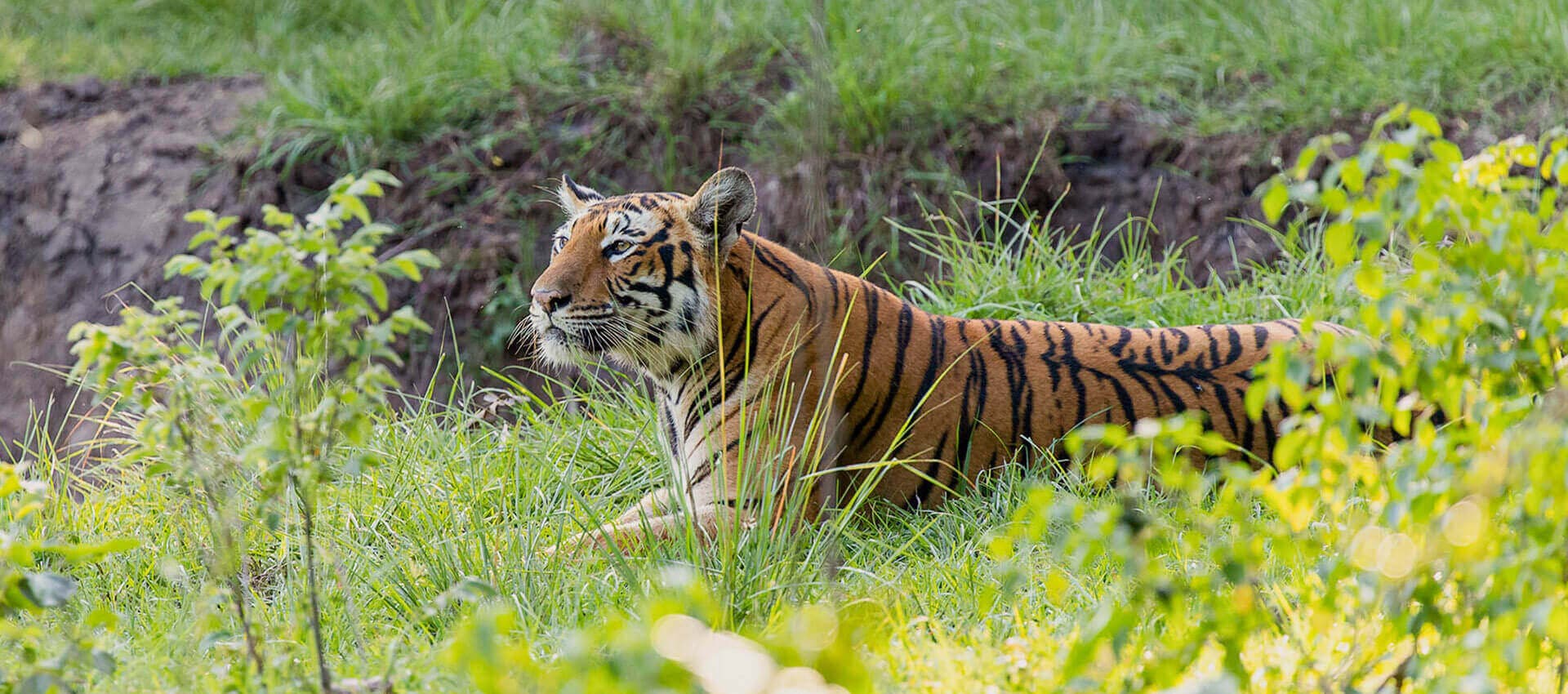
Let’s be honest, most people come to Bandipur hoping to catch a glimpse of a tiger. And the park delivers. With around 70 tigers roaming the reserve, your odds are not bad, especially during the drier months when the animals gravitate toward water sources and the vegetation thins out. But even if the tiger stays hidden, Bandipur has enough to keep you glued to the window.
Some animals you are likely to encounter:
- Asian Elephants– Bandipur has over 3,000, making it one of the largest elephant populations in India. Seeing a herd cross the road in front of your vehicle is something you will never forget.
- Indian Gaur- These enormous wild bison look prehistoric. Spotting one in a clearing stops your breath for a second.
- Leopards, Dhole (Indian wild dog), and Sloth Bears- Rare but present. Early morning safaris give you the best chance.
- Chital, Sambar, and Barking Deer- Present in large numbers and often your most reliable sighting.
- Grey Langurs and Indian Giant Squirrels– Keep looking up into the canopy.
Bandipur is also a birdwatcher’s dream. Over 200 bird species live here, from the vibrant Indian Roller and the striking Malabar Pied Hornbill to Crested Hawk Eagles and Brown Fish Owls. Even if you are not a committed birdwatcher, you will find yourself stopping to look up more than once.
Going on a Safari: What to Expect
The forest department runs two types of safaris, both departing from the main reception centre in Bandipur village.
Jeep Safari – This is the one to go for if you are serious about wildlife. A smaller vehicle means you can get closer, stop wherever you want, and move quietly through the forest. Each safari lasts about 90 minutes, with slots in the morning (6 AM to 9:30 AM) and the evening (3:30 PM to 6:30 PM). Book ahead; these fill up quickly on weekends.
Mini Bus Safari – A more relaxed option, great for families or larger groups. The bus covers a fixed route through the tourism zone, and while you may not get the same intimacy as a jeep, you still get excellent views.
Canter Safaris – Similar to bus safaris, canter safaris are large open-air vehicles. They offer excellent visibility.
A word on timing: go early. The first safari of the day, when the light is soft and the animals are still active, consistently offers the best wildlife encounters. The forest feels different at dawn. Quieter. More alert.
The Night Traffic Ban: Why It Matters
If you are driving through Bandipur, plan your journey carefully. The highway passing through the park is closed to traffic every night from 9 PM to 6 AM. This is not an inconvenience; it is one of the most important conservation decisions made in recent years. Speeding vehicles were killing wildlife at an alarming rate on this stretch of road. In 2018, an elephant named Ranga was fatally struck by a bus at night. After that tragedy, Karnataka and Tamil Nadu agreed to enforce the nightly ban. The road goes quiet. The forest breathes. It is the right call.
Beyond the Safari: More to Explore
Himavad Gopalaswamy Betta– Rising to 1,450 metres, this is the highest peak inside the park. The hill is perpetually wrapped in mist (“Himavad” literally means “foggy” in Kannada), and it sits right in the core zone, which means elephants frequently move through here. There is a small temple at the top dedicated to Lord Krishna, and the views over the forest are stunning.
Kabini Boat Safari– The Kabini reservoir separates Bandipur from Nagarhole National Park. You can take a boat safari along the river, about 2 hours and 45 minutes, and watch wildlife come down to the water’s edge. Elephants bathing, crocodiles on the banks, a heron standing perfectly still, this is wildlife watching at its most peaceful.
Nearby Escapes– Bandipur sits at a remarkable crossroads. Mudumalai National Park in Tamil Nadu is just 12 km away. Mysuru, with its magnificent palace and bustling markets, is 80 km away. And Ooty, the famous hill station, is about 70 km. If you are planning a longer trip through South India, Bandipur fits naturally into a wider circuit.
When to Visit
Bandipur is open to visitors year-round, but the experience varies a lot by season.
- October to February- This is the sweet spot. The weather is cool and dry, visibility in the forest is excellent, and wildlife sightings are at their peak. If you have a flexible schedule, aim for this window.
- March to May- It gets hot, but this is actually a strong time for tiger sightings. Animals cluster around the few remaining water sources, which makes them easier to spot.
- June to September– Monsoon season. The forest turns a spectacular green, but the park may operate with restricted access, and dense foliage makes wildlife harder to see.
How to Get There
By road is the easiest option. Bandipur sits directly on the Mysuru–Ooty highway, making it straightforward to drive from Bengaluru (about 4–5 hours), Mysuru (about 90 minutes), or Ooty (about 90 minutes). The nearest airport is in Mysuru, 80 km away, and the nearest major railway station is at Nanjangud, about 55 km from the park.
Bandipur Deserves More Than a Pit Stop
For many travellers, Bandipur is the stretch of road between Mysuru and Ooty, somewhere you drive through and maybe slow down for an elephant sighting. That is a missed opportunity.
Stay a night or two. Go on the early morning safari. Sit in the quiet of the forest and let Bandipur do what it does best: surprise you. Karnataka has no shortage of beautiful places to visit, but very few that give you the feeling of genuinely stepping into the wild. Bandipur is one of them.